
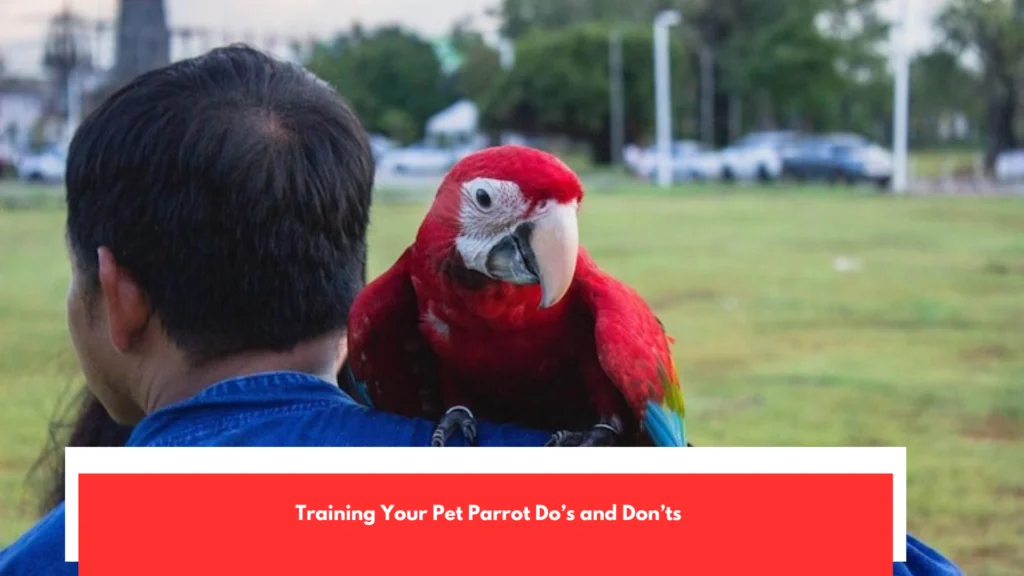
Training Your Pet Parrot Do’s and Don’ts. Keeping a parrot as a pet can be quite fulfilling when we take proper care of its physical, mental and social demands in a very meticulous manner. So as a first step, we will have to develop a good relationship of trust with our parrot. So that once again the bird joins activities with us and our family group of its own free will. Animal training will be a great help to utilize this instrument because it means the change of the behavior to an operant way of learning in other words animal training.
Is simply the instruction of our parrots to learn how to create a mutual atmosphere that could live in perfect harmony in a shared environment. We should learn how the system of pet training works and how we can convey to our pet what we need it to learn in order to train our pet, which can be anything. Animal training rests on operant or instrumental conditioning. It is a learning method which is guided by the idea that the more the person undertaking the behavior is rewarded positively; the greater is the chance of repeating that behavior similarly.
Use any brand of nonstick cookware
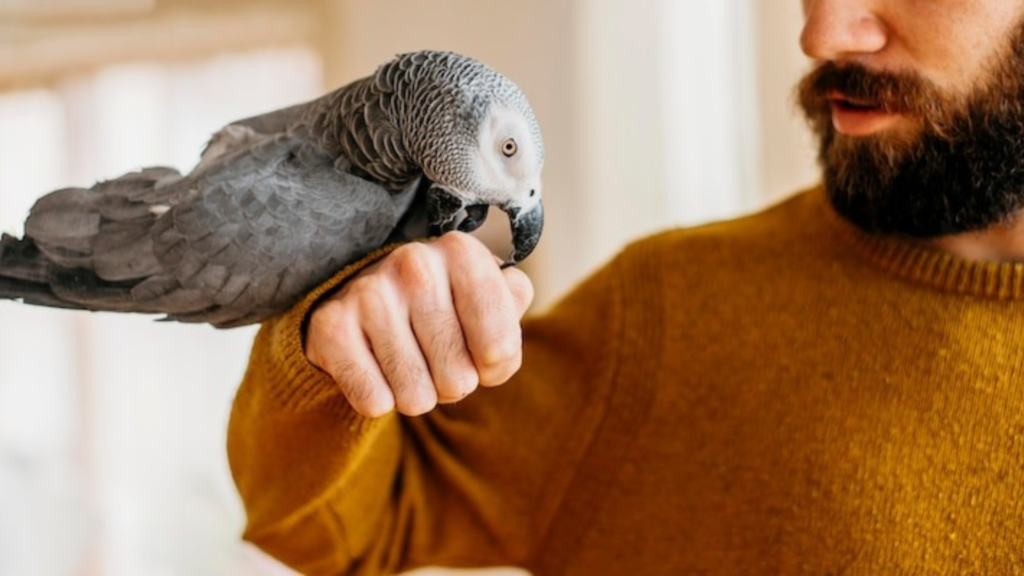
When the consequence given is negative or nothing significant happens; the less the animal repeats the behavior. An example here is that by rewarding the parrot with a treat whenever it goes to our hand; it will learn that this behavior is rewarded and thus increase the chances of doing the trick later on, until all we are left with is having the parrot go to us whenever we call and at a variety of distances. Quite the contrary, in case some bad things happen during the time when it is on our hand, the likelihood that our parrot will visit us will become less. Preliminary in this process is the need to have.
Trust-based relationships. It involves the need to accumulate positive experiences between us and the parrot and a good method to reward the behaviors we want to see. To close this first section it is only sufficient to add that in the training we have to behave toward the parrot regularly, disciplined and predictable. Being responsible in addressing their needs (physical, mental and social) on a day to day basis. Parrots have the reputation of imitating sounds.
Tolerate behaviors that no one else can stand
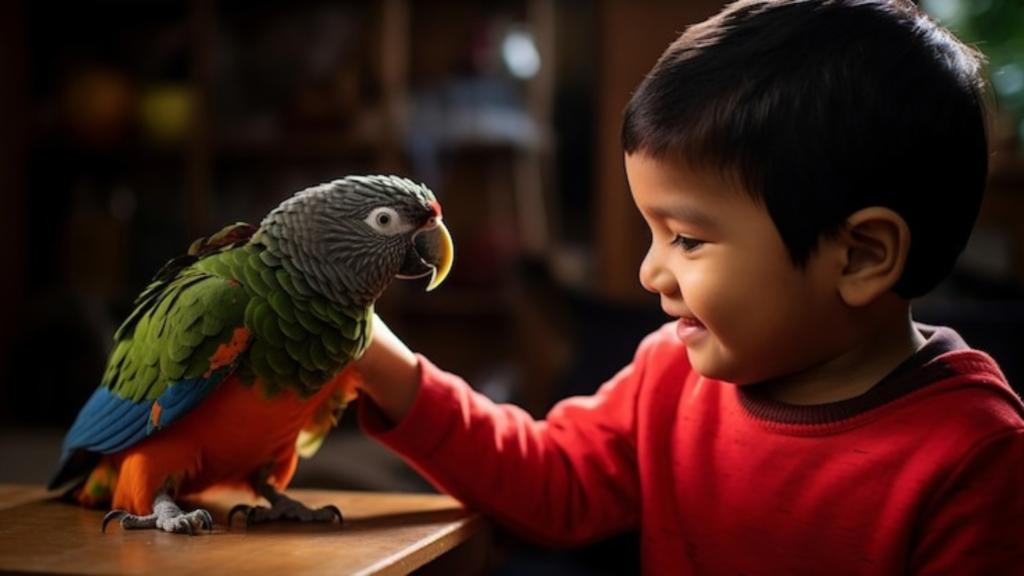
One of the most rewarding things that you can do with your parrot is teaching the bird to talk, but you must remember that not every parrot actually talks and does not all of them possess the same ability when it comes to talking. In order to find out whether your bird is a bird with potential to have his/her speech trained, research. There are talkative birds that talk better than non- talkative birds, therefore you should not hope your pet to talk way more than what it can talk. So this week in our post we are going to provide you with a set of steps which you can use to teach your parrot to talk and make it.
A complete chatter box. The best thing that can make a bird repeat sounds soon is to make it a training routine, and practice on a daily basis. But then this is not the most fool proof way and your parrot might not react well to this process. At any rate, one should not hesitate to give it a try: Use few words. The most effective effort about making the birds talk is to select some of the shortest words they can begin with. Good first words are goodbye, hello, or proper noun.
Respond to behaviors you don’t want by paying attention to the parrot
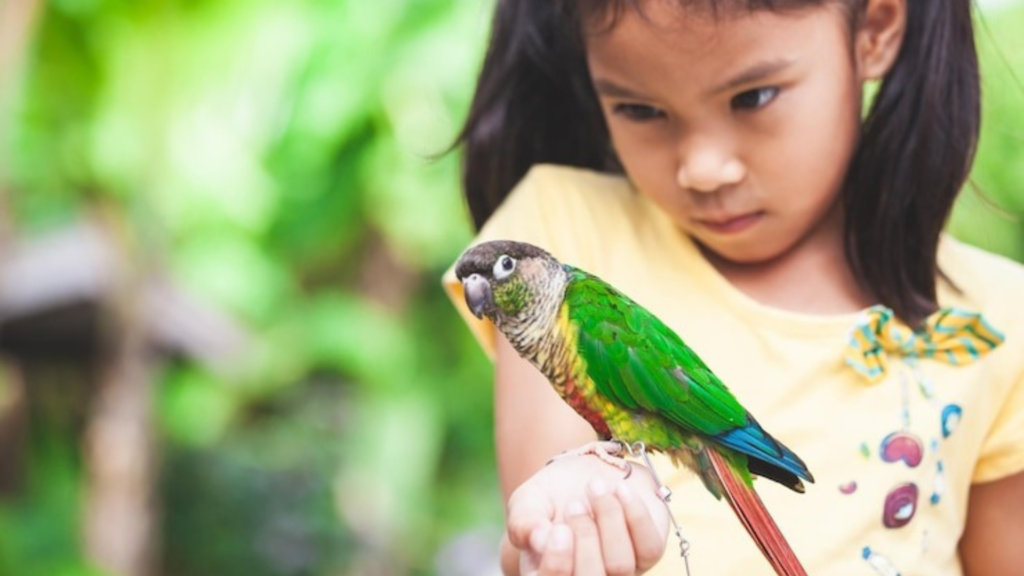
Say with excitement repeating those words. Ordinary words proved to more appealing to most of the parrots when delivered with spirit. Always when you speak to your bird make it a cheery one. Moreover, you need to repeat the words as much as possible at various times of the day. Visual environment: You can present things or food, such as bird toy and favorite food to your parrot as you teach it to speak. This will aid your parrot to match sound results to action or visual items. Select the word that attracts your attention the most. Repeat these words you have chosen and watch your bird.
In case you are attentive enough, you are most likely to realize that there are words which they find to pay more attention to than others. The first word that your bird responds to with most interest is to be used as the first training word. Never use a different word when training the dog. After you spot a word, which is of interest to your feathered friend, talk the word several times. The way that parrots imitate is through repetition making it be imperative.
Using Repetition and Positive Reinforcement to Teach Your Parrot
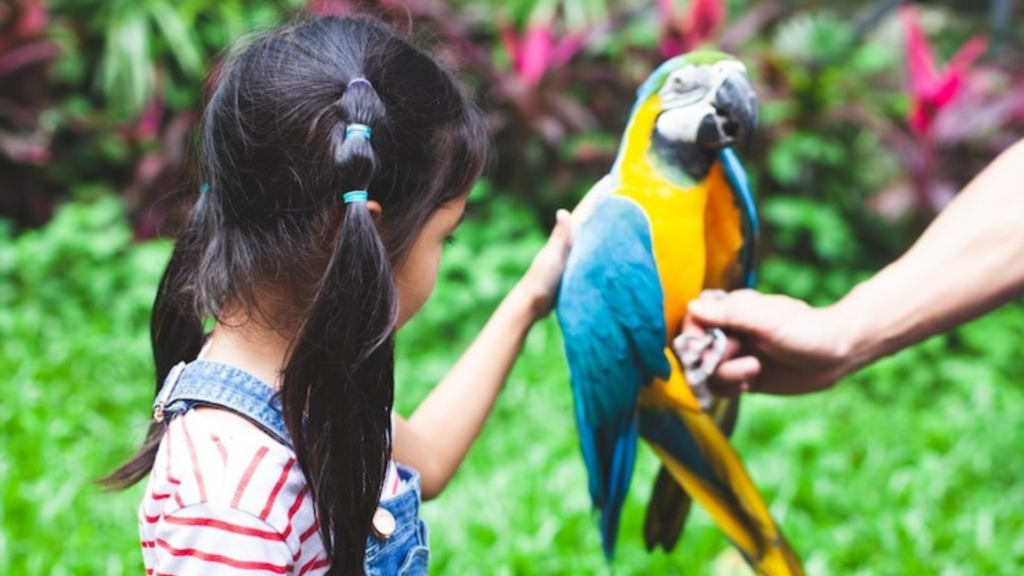
That you repeat the word continuously so as to get your parrot to repeat it. Positive reinforcement Reward all the efforts your parrot tries to imitate sound. Bird treats can be used as rewards or petting or even word encouragement. It is better every time that the owners learn how to make their parrot talk although some prefer to use other learning support like playback devices so that they can teach their birds on how to talk. The approach of both tools may be very effective and will not interfere in the training progress, however, you should realize that the two tools will never substitute.
The process of interaction, so the tools are to be used as the additional training tools. In case you get the direction that your parrot appears to be taking too long in learning these speech requirements, then why not teach it something that it can learn just a bit easier such as whistling. Whistling is very much simpler to most birds than speech imitations. Most parrots, as well as members of other parrot relatives will imitate some kinds of sound with love, a lot of practice, and training as well as time.