
Curated: An Ultimate Guide to Designer Style on your Coffee Table. Coffee table is the Unsung hero of the living room, let us admit it. Coffee is sipped, books are half read, and the victories at game nights are praised, it is where life takes place. In interior design, however, it is by far more than just a surface, it is a crucial point of focus, a style that can either render the whole space complete, or a bit… one-dimensional. Like you need to be in on the inside of design, it may be intimidating to style it. Nevertheless, anybody can be taught how to create a coffee table, which appears like one they saw in a magazine cover.
It is about following a couple of simple rules of balance, texture, and uniqueness instead of buying the most expensive baubles. It will be demonstrated in this step-by-step tutorial of how to transform this main surface into a personalized collection that not only reflects your own style but also makes your living space appear complete. The Clean Slate in Step One Before any magic will come, you have to have a blank canvas. This is the most decisive–and, often, neglected–step. Dispose of it all, the one coaster, the week mail, the remote controllers.
How to make a coffee table look nice?
Wipe it down until it is shiny. The cleaning is a mere part of this exercise; a mental reset is another part. It allows you to be purposeful to the area without the distractions of your daily life and see what you are looking at. Smooth glass or glossy lacquer or rough wood, it is a clean surface, and immediately whatever you place on it will be enhanced and you will know that this is a strategized place, not a dumping ground. Step 2: Lay the Groundwork The foundation of any good design is most essential.
How to make a table look aesthetic?
A pretty platter, or a large shallow bowl, is also a lovely choice in this. All you place on this foundation will play the role of an actor on your stage. Step 3: Make Height to be aesthetically interesting. Having all the items on a single visual plane when positioning the coffee tables is a common error which may lead to a flat and uninspired visual impression. The trick of a dynamic arrangement is in creating one that has various heights. This provides the extra measure and dimension as well as a smooth ride by the table by the viewer.
How to display items on a coffee table?
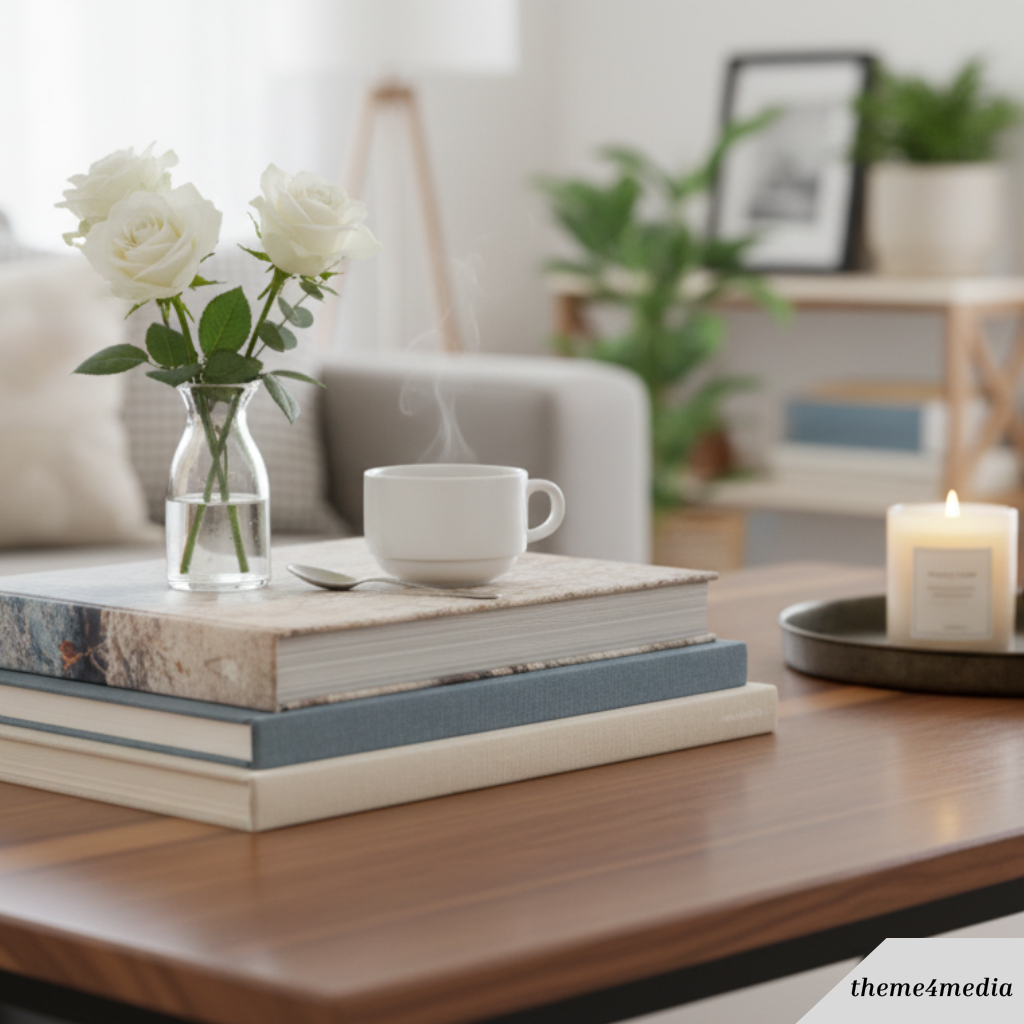
This is achieved through the deliberate mixing of textures and materials. All-one-material surfaces, e.g. made of metal or glass, may appear antiseptic and cold. Instead, develop an intensive sense experience. Blend the natural, warm grain of a tray made of wood with the cool, flat surface of a glass vase. A clear contrast appears between the ceramic bowl’s hard shine and the linen coasters’ soft weave. To attract interest to the light, insert a metal accent, i.e. a copper candleholder or a small figure of brass.
Add Seasonal Accents with Pinecones and Gourds
Some pinecones or gourds of unusual shapes could add the seasonal appeal in the fall. This innate element acts as the blood of the arrangement, which provides it with the feeling of its liveliness and unity with the world outside your window. Step 6: Make Your Personality a Reality. And so, this step will make a well-styled table of your well-styled table. A coffee table must have a story about its occupants. It is these personal touches which make a house a home. Which passions do you have? Perhaps it is a coffee table book on a topic you are passionate about, a small piece of art deco sculpture you found on a flea market, or a beautiful seashell on an incredible trip.
A beautifully scented candle which releases the scent of your choice to the area is touching and convenient. A framed picture of a place of special significance or a cherished person may be a very personal touch. These are what are debatable, significant and ensure that your design does not appear generic. Step 7: The Last Edit You have settled your foundation, erected your mountains, blended your tints and given life and character to your work. Now stand back a step. Look in your work with a critical and caring eye. The objective of this final editing step is to ensure that aesthetics has not been achieved at the cost of functionality.