
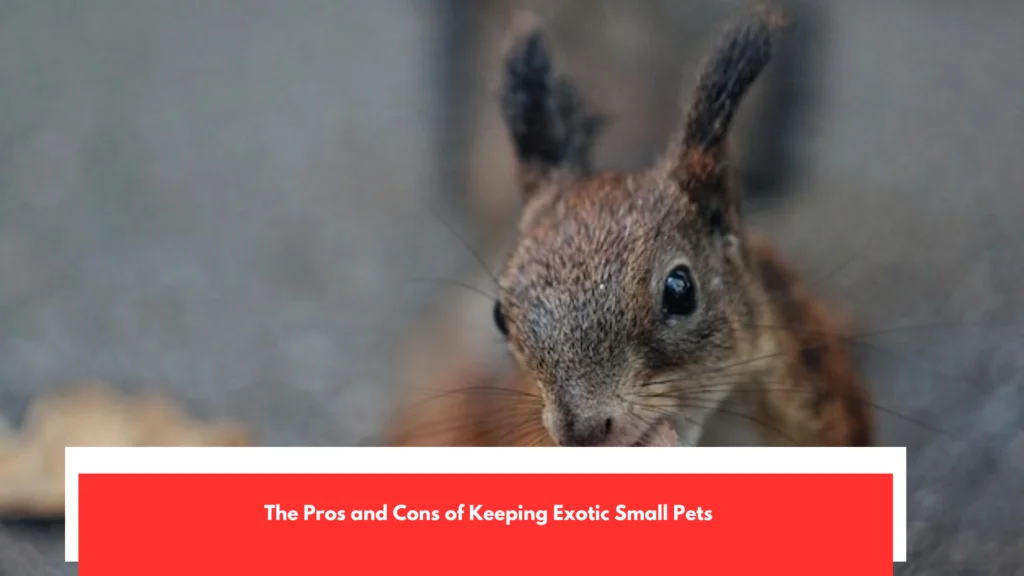
The Pros and Cons of Keeping Exotic Small Pets. The first thought that you may have when you hear the term pet is a dog or a cat since they are the most prevalent pets. Nevertheless, exotic pets is shifting that slightly because the popularity of more exotic animals has grown in the past two decades. The new technologies in food and housing have made them more available and simple to take care of. Exotic animals as pets have become popularized by the internet and social media and buying one of.
Them is not as difficult as it should be. It implies that every person is free to purchase an exotic pet but they do not possess the most basic knowledge about the correct ways of keeping the animal, the dangers its behavior or illness may cause to people and other animals, or the origin of the animal. And, since there is lucrative smuggling and illegal trade, it may that the pet stolen out of the wild or its parents stolen. However, in the majority of cases deciding.
Conservation
What to select as exotic pets is not a matter of guessing what the better choices might be and there is no manual available (at least not before now). Have you ever encountered axolotl on your social media This cute amphibian has a cute expression on its face, which you will not be able to resist smiling, yet are they good pets Let’s see. As we deal with exotic animals, it is not a simple case of supply of animals. Conservation wise, the trade in most exotic pets is legal.
Nonetheless, the escalating need to increase rare and peculiar species has led to smuggling and illegal collection practices that are undermining the conservation and working to the advantage of criminal gangs on a global scale. Some of the species of exotic pet have a declining population in the wild and the animals used as pets might undergo stressful and inhumane conditions during their transportation to the destination. Axolotls a critically endangered species because there many reasons, the pet trade is one of them; in fact, as much as it can found in two lakes in the south of Mexico City, naturally.
Legality
The demand grew as the consumers were impressed by its big eyes and smiling face. They are quite easily and legally bred in captivity and there are legitimate breeding facilities. One thing that would help you to tell an axolotl that has bred in captivity is that it would be white or pinkish, and not be dark brown as what you find out in the wild. To obtain an exotic pet in lawful and direct manner implies purchasing it through a trustworthy rescue facility, breeder, or supplier.
Such suppliers ought to capable of tracing where their animals were coming and should employ best practices of handling any exotic species sold such as requiring the pet sellers to sell exotic animals to individuals who understand how to take care of them i.e. they should not sell an exotic animal to somebody just because the person will be able to buy it. Possession of exotic pets and connected acts and laws is not simple. The endangered species and animals that are potentially dangerous to the health of human beings, the environment or agriculture in the United States.
Invasiveness
Controlled by the federal government. The ownership of exotic pets is however controlled on a state, county or city level as well. Most of such regulations are due to preservation, safety of the people, or environmental reasons. One should research and understand the laws applied in the federal, state, and municipal levels and implement them. In Mexico, axolotls are an endangered species, and there are international rules that allow the trade to take place without causing harm to the wild animals. One cannot export and import axolotls abroad in case they are being caught in the wild.
Axolotls can be owned but in some US states owning them is illegal or authorized by a permit because of the danger that the axolotls may escape and become an invasive species. All pets provide some kind of risk to human health either due to the potential of transferring zoonotic diseases or by use of bites, scratches and poisoning. Something which can mitigate the extent of the risks is the knowledge of the origin of an animal, the risks, diseases peculiar to the species, its behavior, and conditions in which it can live well. The axolotls are not a threat to the human health.
Zoonotic Risks and Exotic Pets
They, as well as all exotic animals can be carriers of zoonotic diseases, but they are, as a rule, easily avoided and treated, like salmonella. And they do not possess corporeal quality which may hurt someone. One of the chief reasons relating to spreading of invasive species is the exotic pet trade, which leads to a significant loss of biodiversity and in certain situations, to an overwhelming economic cost because of agricultural and fisheries damage. Another one of the factors to the decline of the axolotl in the wild is the introduction of invasive species into its little native range.
Conversely however, there is always the possibility of introducing possible high ecological impacts to the pet world by releasing axolotls into an environment resembling that of their home ground, possibly overrunning prey like the native salamanders. In case you cannot continue keeping your pet, call your local rescue center, a responsible pet store or other respected shelter, accredited zoo, or veterinarian, to find someone who will be willing to keep the pet. Make no online advertisement of your animal to sell nor set it free in the wild.